A small house, making a small number of things.
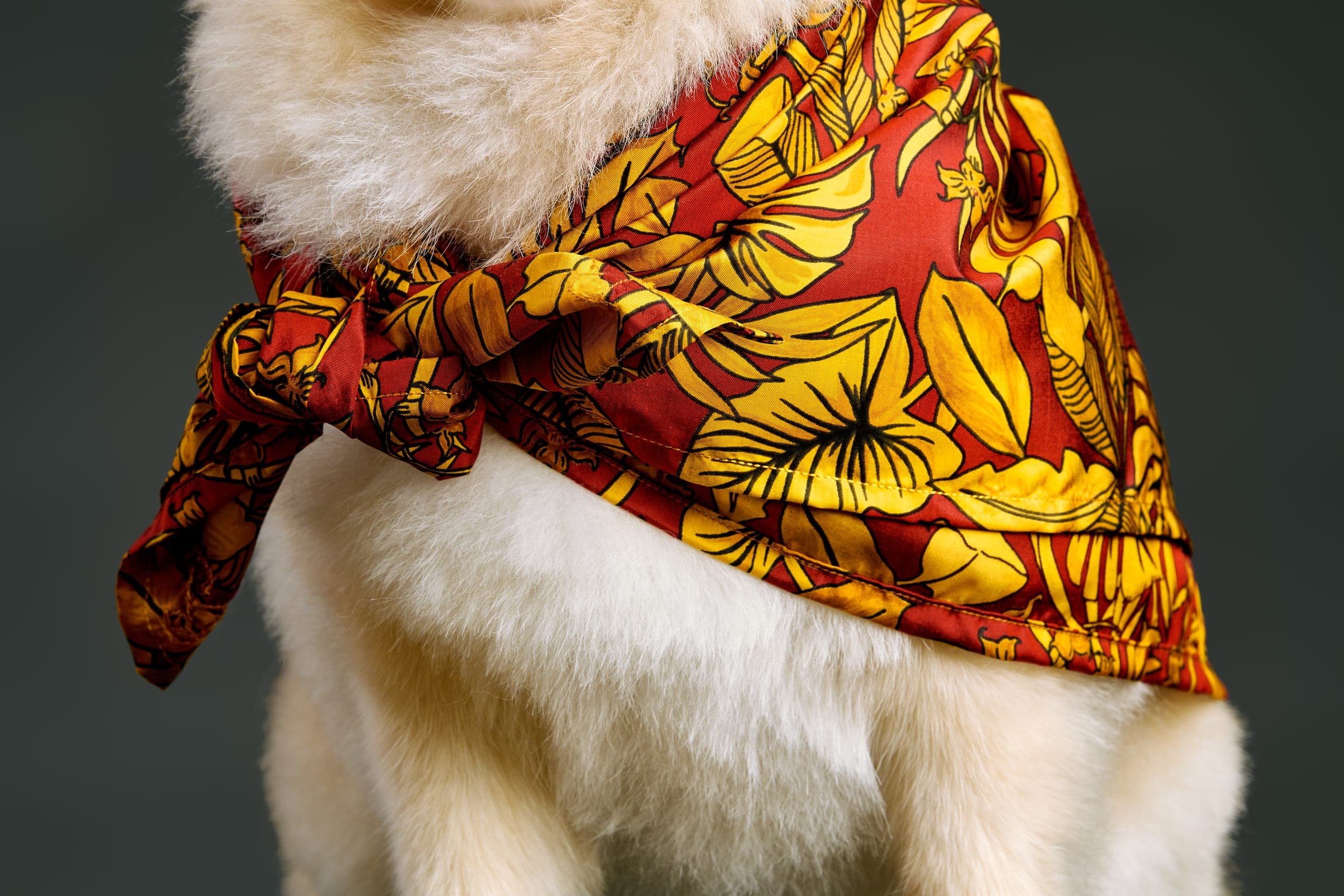
BambooTails is a French-Canadian house making silk accessories for dogs. It began with a simple objection: everything sold for dogs is made as though the dog were a joke, and the person buying it had no taste to offend.
So we make one thing properly. Real silk, chosen for how it falls and how it ages. Cut by hand. Hemmed by hand — the rolled edge on every scarf is turned and stitched by a person, which is slow and is the reason each batch is small.
We have shown the scarves in person to luxury boutiques in Paris, and we have been in conversation with the Jane Goodall Institute about what an ethical animal brand owes the animals it depends on. Both of those conversations changed what we make.
Nothing on this site is photographed on a model that isn't a real dog, in a scarf that doesn't exist. Where we show something imagined, we say so on the same line.
What we hold to
Ethics & animal welfare
A brand built around dogs should be measured by how it treats them. No animal is a prop, and nothing we make is worn for a photograph and then discarded.
Craft above volume
Each scarf is cut and hand-rolled. That limits how many exist, which is the point — this is an atelier, not a production line.
Materials that last
Real silk, chosen to age well rather than photograph well once. Longevity is the most honest form of sustainability.
Timeless over seasonal
We are not chasing a trend cycle. A BambooTails scarf should look correct in ten years.
The material
Three silks
- Four-Ply Thai
- Four strands reeled together by hand. Heavy enough to hold a fold and fall properly on a small body, which is why it works on a dog at all.
- Mudmee
- Tie-dyed thread by thread before it is ever woven, so the pattern exists in the yarn rather than on the surface. It cannot be printed and it cannot be faked.
- The Lost Weave
- The square handed over in Episode 01. Every expert who has held it has placed it wrongly, because it is two traditions in one cloth: an Isan Mudmee thread-resist, woven on a northern Lanna loom. Nobody looks for a Khon Kaen technique nine hundred kilometres north of Khon Kaen, which is exactly why it has stayed lost.
Isan, north-east Thailand
A skilled reeler produces enough for perhaps two scarves in a day.
Khon Kaen
The pattern must be planned in reverse, before a single pass of the loom.
Unplaceable — and that is the clue
One square exists. Two people have claimed they could reproduce it; neither could.
The hands
Three techniques
None of these can be bought and none can be hurried. Each one has to be learned from someone who already has it.
01
The Hand-Rolled Hem
Tokyo · taught by Miko
The edge is turned and stitched by hand so the hem is part of the cloth rather than attached to it. It is the difference between a scarf that falls and a scarf that hangs.
What it costs
Forty minutes per edge. Four edges. It cannot be hurried and it cannot be delegated.02
First-Light Dye
Kyoto · taught by Sora
Dyeing in the one hour of morning when the light does not lie about a colour. What is matched at noon is wrong by evening.
What it costs
One hour a day. Miss it and the batch waits until tomorrow.03
Reverse Planning
Khon Kaen · taught by The San Kamphaeng master
Designing the finished pattern backwards into the undyed thread, so the image emerges from the weave rather than sitting on it. Isan by origin — the master carried it nine hundred kilometres north and worked it on a Lanna loom, which is the whole reason nobody can place The Lost Weave.
What it costs
Every error is invisible until the cloth is finished, and then it is total.
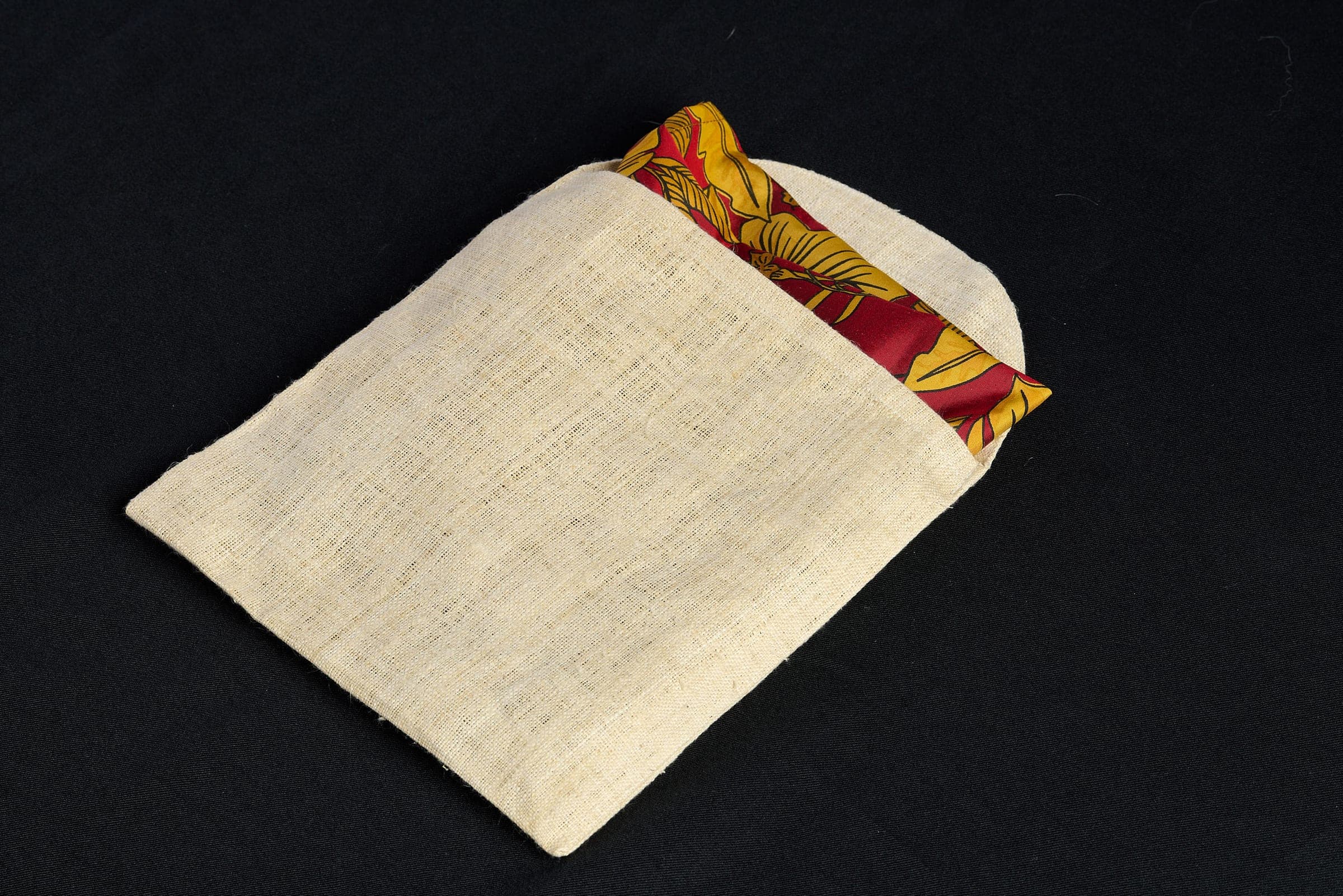
It arrives in hemp
Every scarf is sent folded in a hand-loomed hemp pochette — no plastic, no printed carton that goes straight in the bin. The pouch is meant to be kept and used; it is where the scarf lives between wearings.